It is so unfair when your parents separate. Your whole life changes because of something you have no control over. The impact of what has happened is likely to have a big effect on your life. You might have to move house, change school and see less of one or both of your parents. This has a huge impact on our lives, so what are your rights when this happens – do you even have a say?
What is Article 12?
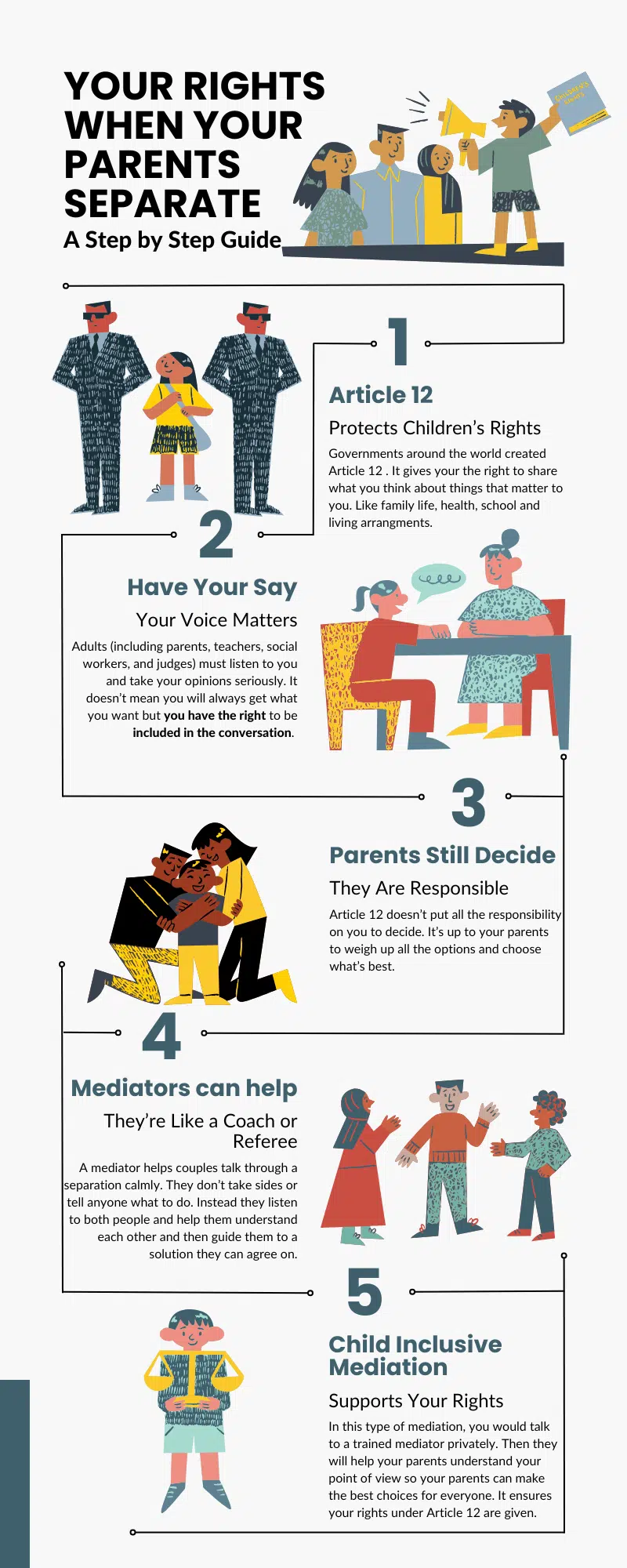
Article 12 is part of a big agreement between countries all around the world to protect children’s rights everywhere. It’s called the United Nations Convention on the Rights of the Child, and it’s all about your right to have a say in things that affect you.
It means you have the right to share your thoughts, and feelings about things that matter to you — like your family life, school, health, or living arrangements.
Adults (including parents, teachers, social workers, and judges) should listen to you and take your opinions seriously, depending on how mature and ready you are to understand the situation.
It doesn’t mean you always get exactly what you want and it is still up to the adults to make the choices — but it does mean you have the right to be included in the conversation and to be treated with respect.
Children have a say but parents decide
When adults make decisions about your life — like where you live after your parents separate, or how things work at school — your voice should be part of that decision. You’re the one living through it, so your perspective is important. BUT that doesn’t mean you have the responsibility to make the final decision about what happens.
Article 12 means parents should listen to your ideas, thoughts and feelings but it’s up to them to make the final decision about what is best. It’s better that parents have this responsibility because they have more life experience and they will need to balance the needs of everyone in the family when deciding what’s best.
Imagine you’re the co-pilot on an airplane. You have a headset, and your voice matters — you tell the captain (your parent) if you see something wrong, if you’re feeling nervous, or if you think there’s a better flight path. The captain listens carefully because they trust you and care about you. But at the end of the day, the captain is the one responsible for flying the plane safely, because they have the experience and the big picture view that you might not see yet.
Accessing your rights
One of the options parents have when they are making arrangements relating to their separation and/or divorce is Mediation. Mediation is like having a referee or coach help two people solve a problem without picking sides.
A mediator helps couples talk through a separation calmly. They don’t take sides or tell anyone what to do. Instead, they listen to both people and help them understand each other and then guide them to a solution they can agree on.
Child-inclusive mediation is when someone talks to you to understand how you’re feeling, then helps your parents know what you need, so your parents can make the best decision for your family. It’s a great option that makes it easier for your voice to be heard in the process. Your parents may not know about child-inclusive mediation and it is something you can ask them to do if you feel it would help you express how you feel and what you would like to happen.
How does child-inclusive mediation work?
A trained mediator would meet with you privately to understand your thoughts. This means you can say everything you want to without worrying about hurting anyones’ feelings or having to say things in a particular way. After speaking with you, they will share your feelings with your parents in a kind way that helps them to make better choices for everyone. You won’t have to make any choices, but your thoughts and feelings will be taken seriously.