
Why does it help to understand how you react?
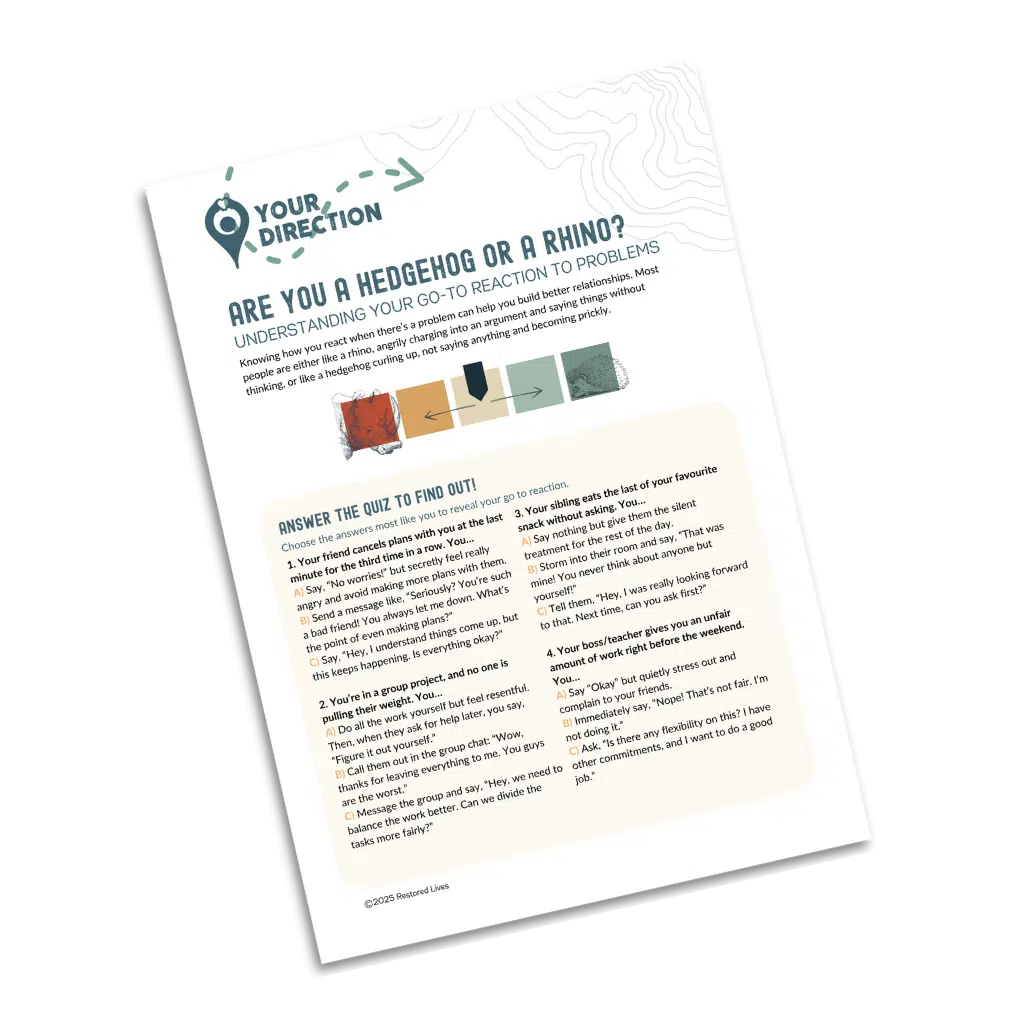
Everyone has a different reaction style when there’s an argument or a problem. Some people go full “rhino” — charging in and saying everything that’s on their mind. Others turn into “hedgehogs” — staying quiet but becoming prickly without ever really saying what they are thinking.
The disadvantage of rhino and hedgehog reactions
Rhinos can make arguments worse, sometimes they say things they don’t really mean and their words can really hurt others, damaging their relationships. Hedgehogs may never get their needs met because nobody really gets to find out how they feel, what they think or what they want. They can miss out on deeper relationships because their loved ones don’t always know what they want. Understanding how you naturally respond can help you deal with conflict in a calmer, more effective way.
Pause – you have a choice in how you react
When you know your default reaction style, you can start to spot what’s happening in the moment. Maybe your heart starts racing, or you feel yourself shutting down. Recognising those signs gives you a chance to pause, breathe, and think and decide how you want to react. That short pause can make all the difference between reacting in anger and responding with confidence.
Practice calmly speaking up
Being aware of your patterns also helps you speak up for yourself without making things worse. If you tend to hold everything in, try practising small ways to speak up — like saying how something made you feel instead of keeping it to yourself. If you usually explode, try writing things down first or talking it through with someone you trust before approaching the person you’re upset with.
Nobody’s perfect
The goal isn’t to be perfect — it’s to stay true to yourself while keeping communication open. When you express your needs calmly and clearly, people are more likely to listen, and conversations are less likely to turn into arguments.
Finding a balance
Learning how you react when there is a problem is part of understanding yourself. It makes it easier to stand up for what you need while keeping the peace. It’s about finding that balance — being kind to yourself, honest with others, and confident enough to handle conflict.